
About the book
Kurepa: a mesmerizing journey into the heart of the Guaraní forest.
This novel by Martín Sancia Kawamichi, first prize winner of the 2023 National Arts Fund contest, stands out for its dense atmosphere and persistent narrative tension. The story follows a philosophy student through a disturbing struggle, both physical and mental, set in a world where the line between reality and fantasy blurs.
Kurepa’s greatest strength lies in its evocative and vivid prose, which brings to life the richness of the Guaraní culture through captivating elements: from “payeseras” (traditional healing rituals) to a nature that feels alive and overpowering. This novel combines psychological depth with the mystery of the wilderness, making it ideal for readers seeking a modern, powerful Latin American narrative with a unique cinematic rhythm.
Excerpt
“The buzz of the siesta is very oke’ỹva here, see? Very persistent,” said Dr. Gorgonio Riera Brites, and I thought that the dryness of his voice worked like a wire, a sort of intimate fence with which the doctor held back the siege, the push of the wilderness on the far side of the barbed wire. Maybe that’s why he wouldn’t stay silent. It wasn’t because he wanted us to listen; he was talking because, with the dryness of his voice—in which there was no room for even the slightest blade of grass—the doctor was telling the wilderness, “This is as far as you go.”
“Do you know what oke’ỹva is?” he asked.
“No,” I said.
And Juan ventured an answer, looking at me as if I’d been the one to ask the question:
“A troublemaker?”
The doctor nodded:
“That’s a great deduction, because this buzzing sound seems to be wanting to pick up a fight all the time, see? But no, that’s not what it means. Oke’ỹva is when a person can’t sleep. When you can’t get a wink of sleep. Insomnia, see? And these damn bugs are oke’ỹva. Their behavior is very annoying. They are constantly disturbing your nap, your night. Your twilight. And I say they’re persistent because they use that buzzing sound to mate. That show-off on heat believes it’s doing a serenade. But let’s not be unfair to it—the bugs aren’t the only ones to blame. Everything here buzzes, see? All the time, every minute of the day. The buzzing, I say, is the soul of the Paraguayan. It’s our trademark.” He swung a series of quick blows, and although the horseflies dodged most of them, the flight of two of them began to falter. “People from each country have their own way of being, see? And that sets them apart from others. I could talk a lot about this because exile during the Stroessner years had me wandering across several countries, and I learned a thing or two. Argentines are show-offs, see? They think they’re the best on the face of the earth, and I don’t mean that as a criticism because I love Argentina dearly—I owe my medical degree to this country, and my vet degree too, so I’d never speak ill of my ‘orthopedic homeland,’ as I call it, my second homeland. But I also can’t deny that this is how Argentines present themselves.” With his gaze, he kept sizing up three new horseflies that had joined the others. “Bolivians, on the other hand, work from dawn till dusk, because they’re always thinking about tomorrow, as if today were a burden, see? A crucifixion they have to pull out of their own asses.” He stopped looking at Juan for a second, and looked at me. “In order to get ahead, and eventually buy a little house, furniture, a shop, an SUV, a trampoline. Bolivians are living examples of a moral lesson; I admire them greatly. That’s just my opinion, see? Argentines show off, Bolivians toil, Brazilians dance, play ball and make juice, Uruguayans are bored to tears, Chileans… Well, Chileans betray, and what about Paraguayans? Paraguayans buzz, and they live amidst that buzzing.”
He looked toward the red clay road that ran along the edge of the cemetery—the only route anyone wishing to visit his two offices could take—then he stood up from the green chair, moved it a few steps until it was completely sheltered by the thatched eaves, and went inside the house. He returned with a blue-and-yellow thermos, a bone mate cup, and three dish towels slung over his left shoulder: one turquoise, one striped in blue and pink, and another one with a pattern.
“Here, one for each of you.” Juan grabbed the striped dish towel, and I took the turquoise one. “With these, you are better prepared to fight. The towel always hurts the bug; it’s its worst enemy, even if it doesn’t kill it with a single strike.”
As if he thought we needed to see it for ourselves, he swatted at a pair of horseflies that had started mating on the wall. Both of them ended up writhing on the floor.
“Poor th…” Juan couldn’t finish the phrase because another of those pesky flies had flown into his mouth. He started coughing, doubled over. The bug wouldn’t come out. He stuck two fingers—his thumb and index finger—in his mouth and used them like tweezers.
The doctor told him:
“No, take them out, take your fingers out and cough harder.”
I got closer to Juan and started giving him gentle pats on the back until he was able to cough the bug up.
“Are you okay?” I asked him.
He nodded yes and spat again, but this time on the ground.
The doctor went into the house and brought a glass of water: “Here, rinse your mouth with this. That bug leaves a really awful taste. I know what it’s like because I’ve swallowed it a few times.”
Juan swished his mouth and spat again.
“Better?” I asked.
“Yeah, yeah. Fine now. Sorry,” he said to the doctor.
“Nothing to apologize for, Juancito. It’s unbelievable that such a tiny bug could cause problems for a giant like you, isn’t it? How tall are you?”
“One meter ninety-two.”
“Yeah, a real giant. A real tuichaiterei. I feel so small next to you.”
We sat back down. Another horsefly approached Juan, and he tried out his fly swatter with a weak swing. The fly dodged it easily and flew back and forth several times, as if it were mocking him.
“You’ll get the hang of it soon enough, Juancito,” the doctor told him. “When you’re so close to the bush, your towel is your best friend. Never leave it behind.”
Despite Juan’s incident with the horsefly, I was still surprised by how the doctor had slipped the word “asses” into his brief dissertation on Bolivian people earlier. I assumed it was an idiom, a Guaraní saying, because if he had so many simple, and far more illustrative, options to use as an example of something annoying, why had he made us think of two terms as difficult to include in the same sentence as “asses” and “crucifixion”? It sounded very unnatural, almost aggressive. I thought I’d mention it to Juan, though I later forgot.
Translated by Lucía Ronco - Edited by Marita Propato
Other related titles
-
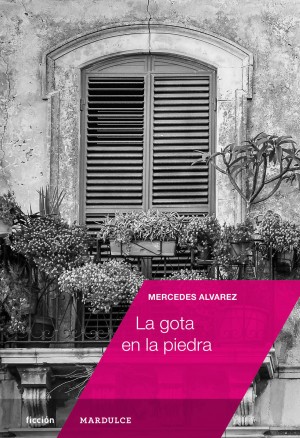
Mardulce
A drop on the stone
La gota en la piedra
2021
Novel -
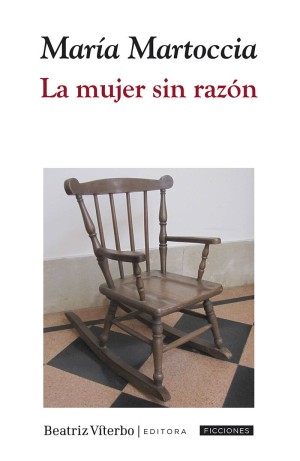
Beatriz Viterbo Editora
A Woman Without Reason
La mujer sin razón
2022
Novel -
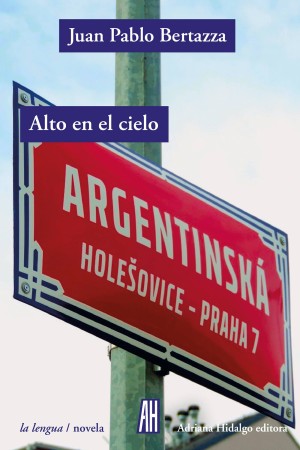
Adriana Hidalgo editora
High in the Sky Above
Alto en el cielo
2021
Novel -
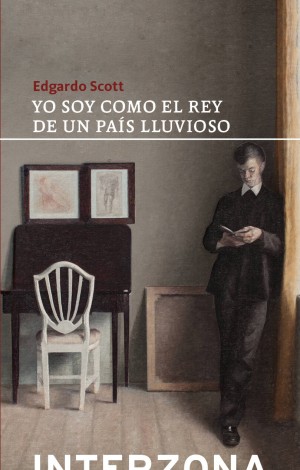
interZona editora
I Am Like the King of a Rainy Nation
Yo soy como el rey de un país lluvioso
2025
Novel